
Links: Part – 1 | Part - 3 | Companion Guide
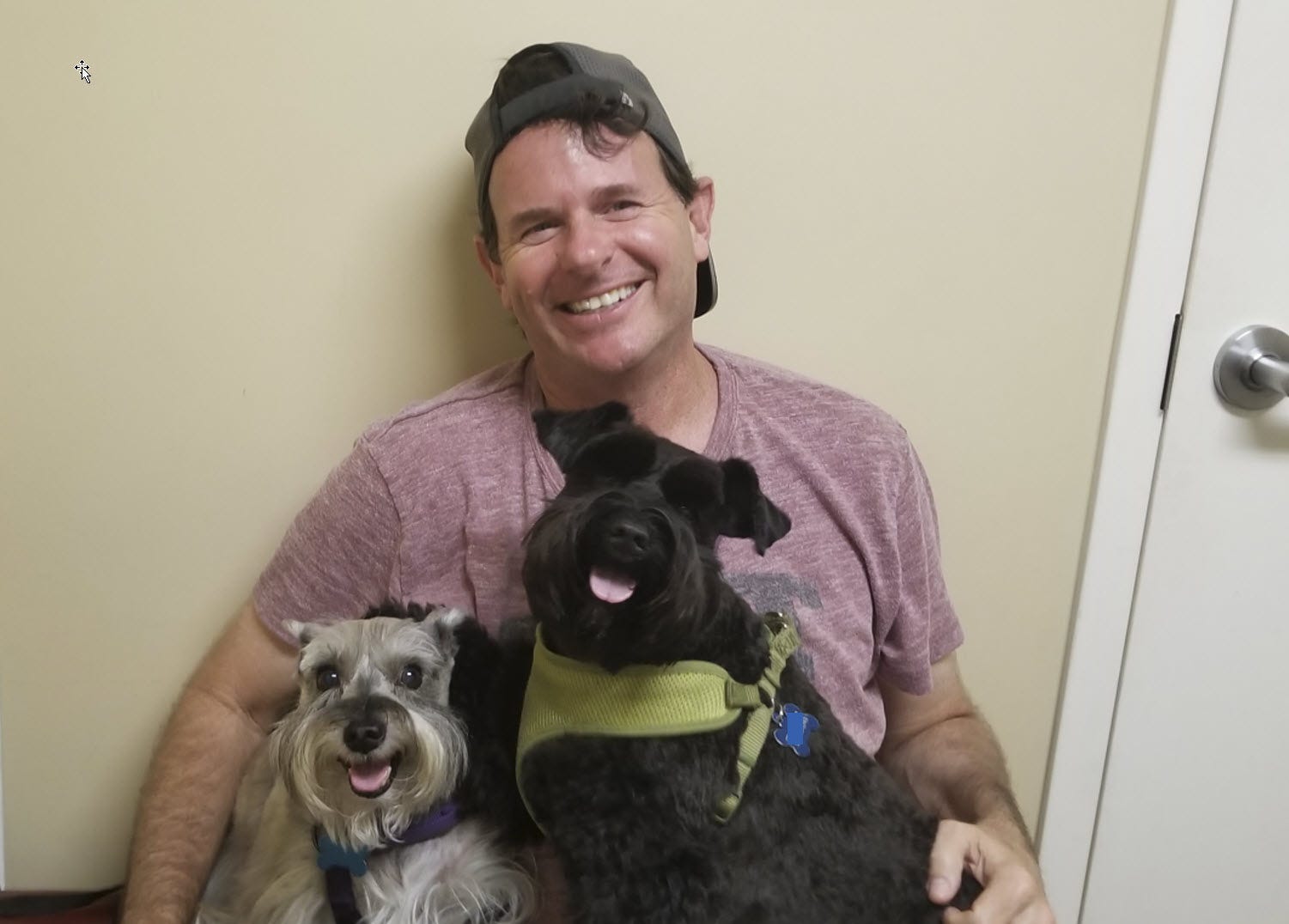
There are two kinds of dog owners in this world. There are people who have dogs, and there are dog people. For the latter, dogs aren’t just pets; they’re family. If that sentence resonates with you, you’ll understand everything that follows. If it doesn’t, this may not be for you.
When I ended Part-1, I thought I was writing about managing a treatable disease and navigating the mechanics of a chronic illness. What I’ve come to understand is that this story isn’t really about diabetes. It’s about the illusion of control.
At the root of that illusion is a single word; treatable. The word implies predictability. It suggests that if you follow instructions, if you are disciplined, if you do everything correctly, stability will follow. But what follows in this story is anything but stable.
This all unfolds against a backdrop that makes things even tougher. I am still unemployed after 10-months, and I’m “broke.” The financial pressure is real. By the end of this story, it will be clear why I describe the experience as traumatic. I even sometimes question whether I’ve truly done right by Jetson.
Brief Recap of Part-1
Jetson was diagnosed with diabetes on October 21. Within days, the twice-daily insulin injections became a struggle neither of us was prepared for. He refused them outright. I brought in a mobile vet tech (VETTech1) to help, assuming competence would calm the situation but, instead, it escalated it. He learned to fear the needle. I learned to expect resistance. We both became reactive.
On October 30, we switched to a long-lasting insulin, Degludec, reducing injections to once per day. That change wasn’t incremental, it changed everything. Two shots a day was impossible. One shot gave me a fighting chance to care for him and get him stable. It made the situation manageable in a way it hadn’t been before. The psychological barrier didn’t disappear, but for the first time since his diagnosis, I felt hope.
Throughout November, my life narrowed to a routine built around his injections and feedings. I drove him daily to a clinic (VET1 or VET4) for the injection. Sundays required additional coordination, while holidays meant navigating emergency hospitals (VET2 or VET5). Stability became something that required constant logistical effort.
Then, on November 11, I lost Chance, Jetson’s companion of nine years, unexpectedly. It was one day before Chance’s seventeenth birthday. There was no long decline. No gradual preparation. Just emptiness. Even five months later, the grief hasn’t settled.
By November 28, when I ended Part-1, I was exhausted and quietly preparing for the possibility that I might lose Jetson too. Six veterinary clinics and one technician had already become part of the attempt to hold things together.
Emotional Breakdown
Thanksgiving 2025 was the moment the illusion cracked.
I had always thought of myself as emotionally steady. That day, I wasn’t. Jetson’s blood glucose was far from under control. I was unemployed. My world had grown smaller than I cared to admit. And Chance was gone. It felt as though I was standing in a room where every support beam had been quietly removed.
The grief over Chance wasn’t abstract. Dogs are part of our everyday rhythm. They inhabit the small rituals of life; mornings, routines, sleep, and the quiet in-between moments. I had raised him from a puppy. We understood each other without effort. His death wasn’t dramatic. It was abrupt. There was no emotional runway, just absence. I found myself experiencing a depth of grief I had never encountered before, but Jetson was still alive, so that’s where my focus went.
What Happened After November 28th with Jetson
The objective was simple: get Jetson healthy.
I was trying to manage two conditions common in Miniature Schnauzers; calcium oxalate bladder stones and diabetes. Dietary decisions require compromise. I prepare his meals twice daily, not because it’s convenient, but because it gives me something concrete to control. It ensures he eats cleanly. It’s one variable I can stabilize.
For weeks, I drove him to VET4 for daily shots. It was efficient and affordable, but it reinforced a truth I didn’t want to admit: I was outsourcing the most critical part of his care because I wasn’t capable of handling it myself. Sundays required hiring another vet tech (VETTech2) to come to the house. Holidays meant navigating systems overwhelmed by emergencies. On Christmas Day, I was forced to drive to VET2, a 50-mile round trip for a single injection.
Somewhere during that drive, something changed. I pulled off I-95 into a hotel parking lot and decided I would give him the injection myself. I hadn’t done it in over two months. The mechanics weren’t complicated. The hesitation was psychological.
I administered the shot successfully!
In that moment, I realized something subtle but important; fear had become habit. And habits, even powerful ones, can be broken. I wasn’t claiming “mission accomplished,” but I had overcome my fear of giving the shot. I also learned something practical. When Jetson was in a confined space, the resistance diminished. Structure reduced resistance.
What Happened Next Was Catastrophic
By late January, Jetson’s bladder stones were under control and his blood glucose stabilized at 14 units per day. After months of adjustments and six glucose monitors, the volatility quieted. Relief came first, then pride. For one brief day, it felt as though persistence had finally produced stability. I allowed myself to believe we had crossed into safer territory.
The very next morning, Jetson began bumping into things. First a garbage can, then a curb. Something was wrong. I secured an emergency visit with an ophthalmologist (VET8). They took Jetson back for examination while I sat alone in the waiting room. After some time, she called me into the room. She looked at me and said calmly, “Jetson has developed aggressive cataracts from the diabetes. He will likely be blind within two weeks.”
If I say the floor dropped out from under me, it still doesn’t capture the moment. I went into physical shock. As she explained my options options and timelines, I watched her mouth move, but there was no sound. I didn’t hear a single sentence she spoke.
The Surgery
It took a full day to pull myself together. When I spoke with the ophthalmologist again, she explained my options. I told her I wanted to proceed with surgery to restore his sight as soon as possible.
The surgery would consume most of what I had left in savings. The financial reality registered, but it didn’t factor into the decision. I wanted Jetson to keep his eyesight. That was the only variable that mattered.
The two weeks before the procedure were unbearable. Watching his vision deteriorate day by day was one of the hardest experiences I’ve had with a dog. I suspect I was more affected than he was. Dogs adapt. Humans anticipate. Each time I left the house, I couldn’t shake the image of him sitting in darkness. In that context, cost ceased to matter.
On February 19, the surgery was performed successfully. His vision returned, but success didn’t mean resolution. It meant responsibility; months of careful monitoring, eye drops, and vigilance to protect what had been restored. For a brief stretch after the procedure, it felt as though order had returned, though fragile and conditional.
What Happens Next Is Not to Be Believed
Two weeks later, during an ordinary walk, Jetson ingested what I believe was a discarded marijuana edible. There had been several incidents in my neighborhood where dogs picked up similar items, so I already knew the symptoms to watch for. I just never expected it to happen to us.
He became severely ill. For a diabetic dog, appetite loss is not minor. It destabilizes everything. Insulin without food becomes dangerous. Suddenly, I was balancing post-surgical eye recovery, medication side effects, diabetes management, and acute toxicity, all at once. Recovery took two full weeks.
By this point, my nervous system was exhausted. I wasn’t just managing events; I was reacting to them. Every molehill felt like a mountain. Every irregularity felt like the beginning of another collapse.
Something Positive Finally Happened
Eventually, I realized I could not continue outsourcing the injections. If this was going to be sustainable, I needed to become competent at delivering the shots myself.
So I began asking neighbors to help hold Jetson while I administered the shot. Repetition made me competent. Competence removed the anxiety. What’s ironic and genuinely funny, is that Jetson seems to enjoy being held by my neighbors. He watches me administer the injection and offers no resistance.
On the occasions when no one is around, I return to the insight from that Christmas parking lot. The front seat of my car has become a controlled environment, a place where I can give the shot with minimal resistance. Structure reduces the chaos.
I haven’t returned to the clinic for injections in over a month. I haven’t conquered the issue entirely, but I’m no longer intimidated by it. Progress, in this case, isn’t dramatic. It’s incremental, and that’s good enough for now.
Where Things Stand
Today, Jetson is stable. His blood glucose is controlled. His vision is strong. Physically, he is well.
But Chance is gone. Jetson is alone in a way he wasn’t before. Stability cannot replace companionship. So this weekend, I am bringing home another dog as a companion. I believe it’s the right decision, not just for Jetson, but for me as well. I’m hopeful, though cautious.
This is where Part-2 ends.
I am fully competent in giving his injections. There is no anxiety on my part anymore. The mechanics are routine. But Jetson still remembers the beginning; the early chaos, the fear, the struggle with that first mobile vet technician. He won’t allow the shot in the open. Only in the arms of neighbors or in the confined front seat of the car does he settle enough to let it happen. I’ll need to find a way to gently desensitize him over time. It won’t be easy.
This experience has taught me that “treatable” is a clinical term. It suggests order. Life rarely cooperates with that suggestion. Vulnerability feels less like an exception now and more like a constant.
All I can do is move forward deliberately; one decision, one recalibration, and one injection at a time.
______
Legend for Veterinary Clinics & Technicians
VET1: Primary veterinary clinic for both Chance and Jetson, approximately 20 minutes from my home.
VET2: Internal medicine specialty clinic. Open 24 hours a day, 7 days a week. The round trip from my home is approximately 50 miles.
VET3: 24/7 emergency veterinary clinic near my home.
VET4: Veterinary clinic five minutes from my home, used solely for Jetson’s daily injections.
VET5: Another 24/7 emergency veterinary clinic near my home.
VET6: Specialty veterinary clinic assisting with Jetson’s dietary management.
VET7: University College of Veterinary Medicine for dietary management.
VET8: Ophthalmology specialty clinic.
VETTech1: Mobile veterinary technician.
VETTech2: Mobile veterinary technician.