
Links: Part – 2 | Part - 3 | Companion Guide
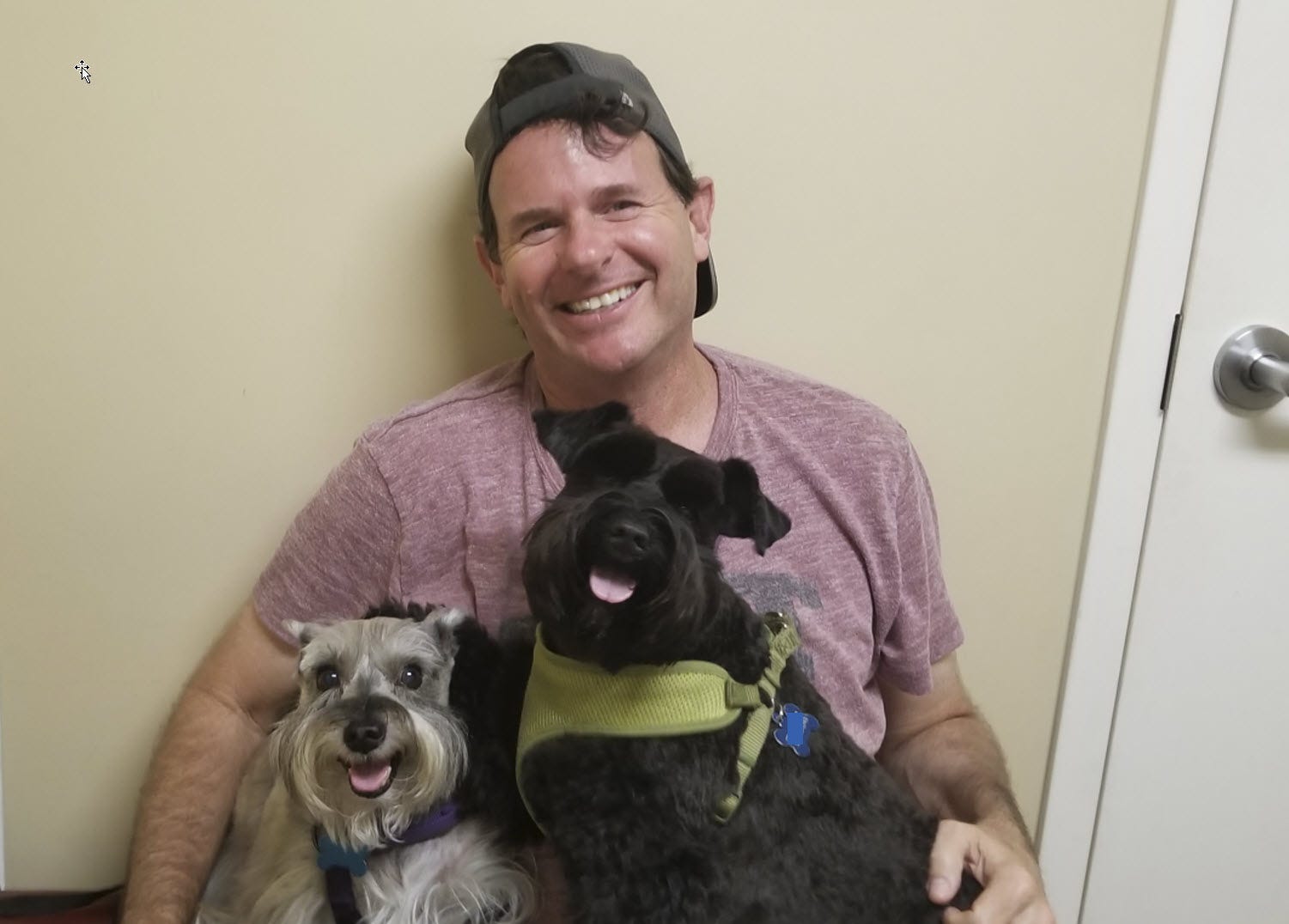
There are two kinds of dog owners in this world. There are people who have dogs and there are dog people. For the latter, dogs aren’t just pets. They’re family.
When my first dog passed, it devastated me more deeply than the death of my own father. If that sentence makes sense to you, then you’ll understand everything that follows. If it doesn’t, you can stop here.
This is Part-1 of my experience, which concludes on Friday, November 28, 2025. In Part-2, I will share the final results of everything that follows.
THE SUBTLE BEGINNING
In October, my dog Jetson, age 9½, lost a lot of weight in a very short time span. He was also drinking and urinating excessively. On Tuesday, October 21, 2025, I took him to the vet for a check-up.
Later that day, I received the diagnosis, “Your dog has diabetes.”
To my surprise, I felt relief. I had feared something far worse, cancer. What I didn’t know then was that my life, and his, were about to change dramatically.
At best, your daily routine will shift entirely. At worst, you could lose your dog to a treatable disease. It sounds harsh, but it’s the truth. I didn’t know at the time that the only treatment is insulin injections twice a day, every day, for life. No pill. No patch. No pen. No monthly shot. No automated device. Just you, a needle, and the dog who trusts you more than anything.
A WORD ABOUT VETERINARIANS
Before going any further, I need to make something perfectly clear.
In all the years I’ve owned dogs, and it’s been a very long time. I have never met a veterinarian who doesn’t deeply care about both the animals in their care and the people who love them.
I’ve been taking my dogs to my current veterinary clinic, which I’ll call VET1, for 25 years. They are skilled, compassionate, and always going above and beyond.
Any criticism I express here is not directed at any individual clinic or professional. This is an industry-wide issue that only became clear to me through this experience. It’s not a lack of compassion, it’s a lack of accessible delivery options. While some options do exist, owners likely only learn about them through an internal medicine specialist.
THE “TRAINING” THAT ISN’T REALLY TRAINING
Here’s what typically happens when your dog is diagnosed with diabetes:
You’re given the diagnosis.
You’re told your dog must be fed twice a day, 12 hours apart.
You must give an insulin injection within 30 minutes after each meal.
A vet tech walks you through a few practice injections using saline.
You’re sent home with syringes and insulin, typically Vetsulin.
It sounds simple. It isn’t.
Your dog at the vet is NOT your dog at home. Everyone in veterinary medicine knows this, yet the system doesn’t truly account for it. Once you leave the exam room, treatment moves into your hands, into your home, under real-world conditions shaped by anxiety, exhaustion, resistance, financial strain, work pressure, and emotional overload. If everything goes perfectly, life moves forward, though your daily routine is forever changed.
If it doesn’t, panic takes over. Whether you’re emotionally ready or not. Whether you have help or are completely alone. You quickly discover how few true backup plans exist. In that moment, the system is essentially hoping it works because if it doesn’t, the consequences become devastating, fast.
On October 22, I didn’t yet know that within days, that quiet hope would collapse under the weight of reality.
THE NEEDLE PROBLEM
Let me say this plainly: Receiving a shot and giving one are two entirely different experiences.
I’ve never had trouble receiving injections myself, but giving one to someone or something else is entirely different. When it’s your dog, everything changes. Your breathing quickens. You fear hurting them. They sense your hesitation instantly. And, suddenly, both of you are afraid.
If you already struggle with needles, this situation would be nearly impossible. Add real-life stress to the mix, and it can completely unravel you.
THE FINANCIAL AND PROFESSIONAL REALITY I WAS LIVING IN
There’s another truth I need to be candid about: I work in the technology industry, and I’ve been unemployed since August. This is a terrible time to be unemployed in tech. I also live alone, and that matters more than most people realize. Even the vet techs openly acknowledged that giving insulin to a resistant dog is exponentially harder without a second person to help steady, comfort, or simply be there as emotional backup. When it’s just you and the dog, every failure lands squarely on your shoulders.
Yet, paradoxically, this hardship became the only saving grace in the entire crisis. I was able to devote my full, uninterrupted attention to both of my dogs. For every vet visit, every failed attempt, every emergency decision, every 2 a.m. panic spiral, I was there physically and emotionally, without distractions.
Had I been working, I honestly don’t know how I would have survived this. I suspect I would have needed to take a formal leave of absence. Daily logistics alone would have been impossible.
THE COLLAPSE
When I began giving the shots on October 22 at home for the first two days, I managed. Not gracefully, but I managed. By the third day, everything fell apart. My dog resisted. The more he resisted, the more anxious I became. I was in full panic mode. I couldn’t see a way forward. That night, I didn’t sleep. Not a minute.
I paced the house. I scoured Google, ChatGPT, YouTube, Reddit, desperately searching for a solution. How could a single person, living alone, already exhausted, possibly do this twice a day, forever?
And the reality hit: There is no alternative. If you love your dog, you must give the injections. There is no Plan B. I felt trapped and, worse, I felt like I was failing Jetson.
THE LIFELINE THAT WASN’T
On the morning of day 3, I brought Jetson back to VET1 to get his shot. The problem I now faced was what to do in the evening when my vet is closed.
Later that day, I went for a long walk to clear my head. I stopped by a small pet store I frequent. The owner took one look at me and asked what was wrong. I told her what had happened. Without hesitation, she handed me the card of a mobile vet tech (VETTech1), who specializes in helping owners through exactly these moments. I called immediately.
For five days, twice a day, VETTech1 came to my home to administer the injections at a cost of more than $100 per visit (over $200 per day). We coordinated every morning and every evening. She was skilled, patient, and kind, but in truth, the process only further traumatized Jetson. Eventually, he bit her, something completely out of character for him. It became clear that this was neither a scalable solution nor one I could afford to sustain for any length of time.
I returned to VET1 and pleaded for some options. She referred me to a specialist in internal medicine. Thankfully, I was able to get an appointment the very next day. I refer to this clinic as VET2.
FINALLY, SOME HOPE
By this point, I was completely exhausted; mentally, emotionally, and physically. I had researched canine diabetes relentlessly. What I learned was devastating. Single pet owners, people afraid of needles, or dogs resistant to injections often end up facing euthanasia. The thought of putting my dog down for a treatable condition haunted me.
As I met with veterinary specialist (VET2), she confirmed that insulin injections were still the only treatment. My heart sank. I turned white like Ultrabright toothpaste. Then she mentioned one option: There is a once-a-day long lasting insulin [called Degludec] that didn’t have to be given immediately after meals. It wasn’t a perfect solution, but it was hope.
I realized I could visit a vet once a day for the shot while working on desensitizing Jetson at home. For the first time in weeks, I didn’t feel completely trapped.
A PERSONAL LOSS AMID THE CHAOS
In the middle of all this, tragedy struck again.
On Tuesday, November 11, I lost my older dog, Chance, just one day short of his 17th birthday. Jetson was with me at VET1 that same morning to receive his insulin, as he had for the previous ten days, unaware that he was about to lose the companion who had been at his side for more than nine years. The weight of giving one dog life-sustaining medicine, while saying goodbye to another, is something I will never forget.
I had raised Chance since he was a puppy. Trying to fight for Jetson’s life, while losing Chance at the same time, is a trauma I still can’t fully put into words. Even now, I am still deeply grieving.
THE CURRENT PLAN
From November 1 through November 10, I drove Jetson every morning to VET1 to receive his new once-a-day insulin. The clinic is about 20 minutes from my home. On Sundays, however, I had to drive to VET2, where the specialist worked, because it is open 24 hours, including holidays and weekends. That trip was a 50-mile round-trip, an arrangement that was clearly not sustainable. Still, those daily drives quickly became part of our new survival routine, each mile fueled by the hope that we were finally moving in the right direction.
On November 12, one day after losing Chance, I made the smart decision to transfer Jetson’s daily injections to VET3, a clinic just five minutes from my house. The shorter drive eased the physical strain and slightly softened the emotional toll for both of us.
By November 22, for the first time, I finally saw what I had been desperate for; it was working. His blood sugar was meaningfully coming down. I could see the numbers in real time because he had been wearing a Freestyle Libre 3 sensor. For the first time since this nightmare began, I felt a genuine flicker of hope.
Then, on Thursday, November 27, his blood sugar began spiking again. On Friday, November 28, it was still elevated. The numbers climbed. The progress evaporated. I found myself exactly where I had been weeks earlier; scared, exhausted, and facing the haunting possibility that even this fragile solution was slipping away.
I was in complete and total despair.
LOOKING AHEAD TO PART-2
When a dog is first diagnosed with diabetes, the best possible outcome is that the dog easily accepts the injections. Based on what I’ve learned through conversations with veterinarians and my own research, I now believe this is more the exception than the rule.
Many owners, overwhelmed by fear, resistance, logistics, finances, and emotional exhaustion, end up putting their dogs down for a disease that is entirely treatable. After everything I’ve been through up through Friday, November 28, I now deeply understand and sympathize with those who face that heartbreaking decision.
In Part-2, I will share what ultimately worked, what didn’t, and where Jetson finally lands. As I write this, I don’t know the ending, and the uncertainty is heart-wrenching. Over the last six weeks alone, Jetson has endured more than any dog should, fighting this disease while also grieving the loss of his constant companion, Chance. I am determined to solve this for him. I will also share what I now believe every dog owner deserves to be told on the very first day of diagnosis. If I can solve this for Jetson and help even one family avoid this same ordeal, then this painful journey will have meant something.
EDITOR’S NOTE
I have included below an anonymized list of every veterinary clinic and veterinary technician involved in this journey through Friday, November 28, along with a timeline of key events. Together, they help illustrate not only the frenetic, exhausting, and emotionally overwhelming pace of what I’ve been living through day by day, but also the constant financial strain, where each injection requiring a separate fee that, depending on the provider, has ranged anywhere from $4 to $135 per shot.
My sole focus right now is getting Jetson healthy by stabilizing both his diabetes and his new diet. Once we reach that point, I will then begin working on desensitizing him so that I can administer his injections myself.
______
Legend for Veterinary Clinics & Technicians
VET1: Primary veterinary clinic for both Chance and Jetson, approximately 20 minutes from my home.
VET2: Internal medicine specialty clinic. Open 24 hours a day, 7 days a week. The round trip from my home is approximately 50 miles.
VET3: Veterinary clinic five minutes from my home, used solely for Jetson’s daily injections.
VET4: 24/7 emergency veterinary clinic near my home. I visited once; they were unable to assist.
VET5: Another 24/7 emergency veterinary clinic near my home.
VET6: Specialty veterinary clinic assisting with Jetson’s dietary management.
VET7: University College of Veterinary Medicine for dietary management.
VETTech1: Mobile veterinary technician.
Timeline Highlights
Oct 21: Jetson is diagnosed with diabetes by VET1.
Oct 22–24: Home injections attempted. By the evening of Oct 24, Jetson will no longer allow me to administer his shots.
Oct 25–29: VETTech1 visits twice daily to administer injections and help desensitize Jetson. During this period, Jetson eventually bites the vet tech and becomes deeply traumatized.
Oct 30: Visit with the internal medicine specialist at VET2; transition to once-daily insulin and Freestyle Libre monitor.
Oct 31: Return to VET2 for final fitting of the monitor and first injection of the new insulin.
Nov 1–10: Daily 20-minute drive to VET1 for Jetson’s once-daily insulin.
Nov 2 (Sunday): I visit VET4 because they are open 24 hours on weekends and holidays. Despite the clinic being empty, I am made to wait over an hour with no assistance. I decide to leave and drive to VET2 for the injection.
Nov 9 (Sunday): I drive to VET2 for the injection.
Nov 11: At VET1, Jetson receives his insulin the same morning I lose Chance, one day before his 17th birthday.
Nov 12: Jetson’s daily insulin care is transitioned to VET3, five minutes from my home. This would have been Chance’s 17th birthday.
Nov 16 (Sunday): I take Jetson to VET5 for his injection because they are open 24 hours and relatively close to my home.
Nov 22: For the first time, I see Jetson’s blood sugar clearly begin to come down.
Nov 23 (Sunday): I return to VET5, but the clinic is extremely busy. I then decide to drive to VET2 for the injection.
Nov 25: I visit VET6 to refine Jetson’s diet. His nutrition is especially complex now because he is managing two conflicting conditions; bladder stones and diabetes.
Nov 27 (Thanksgiving): I again attempt VET5, but it is once more overwhelmed. I return to VET2 for the injection. This is the first day Jetson’s blood sugar spikes again, signaling that something is wrong.
Nov 28: I return to VET3 for the injection. Something is wrong. Is it the insulin? Are the vet techs administering the wrong dosage? Is this diet related? At this point, I am emotionally overwhelmed and in profound despair.
What an experience. There is so much about the world of pets that non-pet owners know nothing about. Thank you so much for sharing Erik..
Love this article Erik!! My heart has been hurting for you having to deal with all this with Jetson and the loss of Chance 🐶🥹❤️🩹 Hopefully more peace and healing is coming 🙏 Great piece.